

2026 Guild of Music Supervisors’ Conference: The Professionals Actively Seeking New Music

By: Karissa A. Kelly; Music & Media Journalist
On August 15th, hundreds of music and film professionals from around the country gathered at West L.A. College for the annual Guild of Music Supervisors’ Conference. The common red thread that tied all of its attendees together? A passionate love for music. Having had the honor and privilege of attending, I walked amongst veterans of the field and entry-level industry-adjacents alike. In its twelfth year, and from what appeared to be another successful one at that, the content of the GMS’ panel discussions exhibit a tightly knit community's push toward practically informed expansion and its equivalent focus on niche preservation. From what I’ve been able to glean as a spectator, I’ve come to believe the Guild of Music Supervisors’ event organization was masterfully curated, and any field in search of its prospective legacy would find it in their best interest to take notes.
What is Music Supervision?
Ask this question in a room (or convention) of music supervisors, and answers will vary. Ask this question of a dictionary, and it is defined as selecting, managing, and licensing music for visual media, including commercials, television, films, or video games. A music supervisor is responsible not only for the fun part of curating and choosing the music, but for careful discernment of the content itself that the music will be used for and managing the legal and budgetary parameters that follow.
The Guild of Music Supervisors may have formed in 2010, but the work began in the 1920’s following the introduction of pre-recorded sound in film and earned a proper title when Universal Pictures producer, Joseph Gershenson decided that “music supervisor” fit his job description for his work on the 1951 comedy Abbott and Costello Meet the Invisible Man. With the relatively-recent introduction of streaming platforms and their need for original content, as well as expansion in the way of consumer discovery via social media, gaming and VR (move over, ye olde days of radio) the magnitude of music supervision has grown significantly and doesn’t show signs of stopping.
Looking Forward: Intentional Expansion
For a historically unsung corner of the music and film industries, what you might otherwise find to be a community fixated on preservation and perhaps even a little gatekeeping, what I experienced felt more like a welcoming committee than any stuffy convention, closed to outsiders. There was music brought to us by live DJs, bins full of records for attendees to take home, warmth and fellowship.
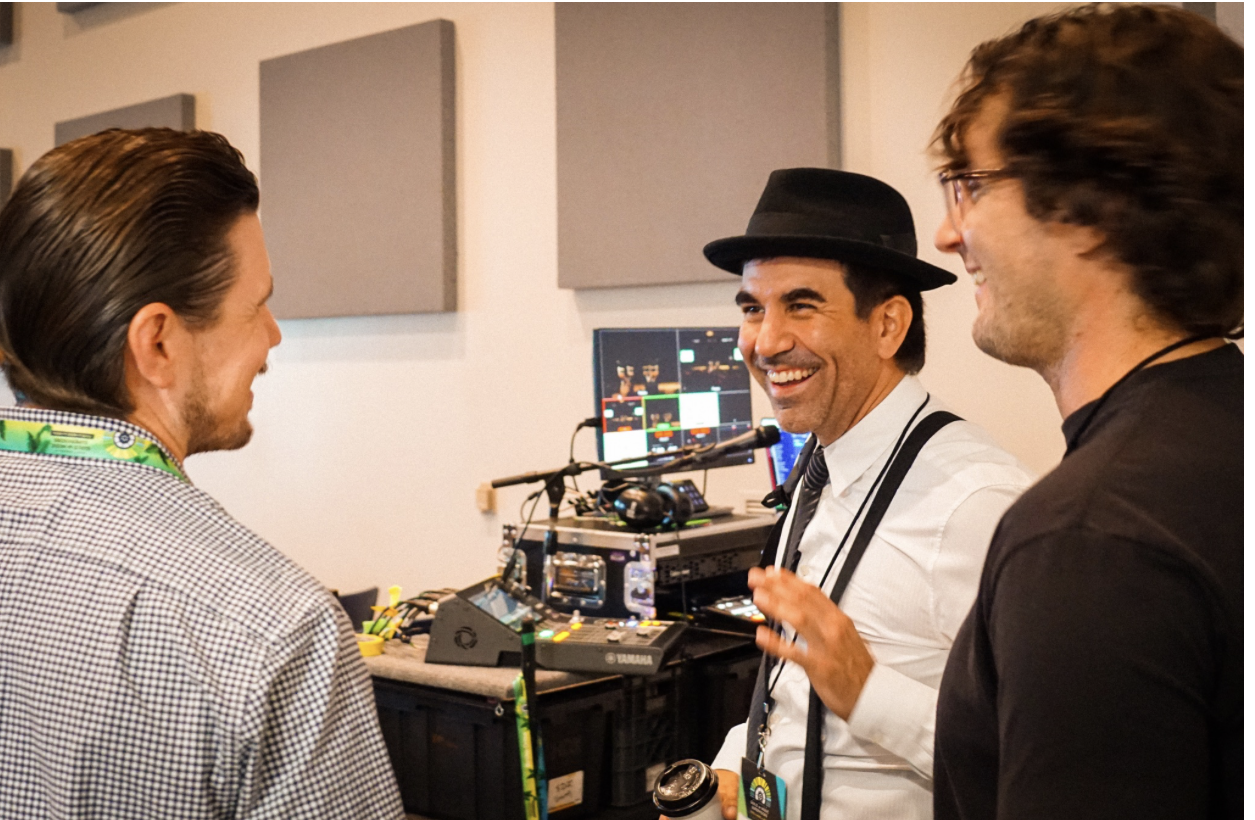
Pictured: Ryan Taalbi of Media Liberated; production company responsible for 12 successful years of livestreaming the GMS Conference.
Opening Remarks
Make it stand out
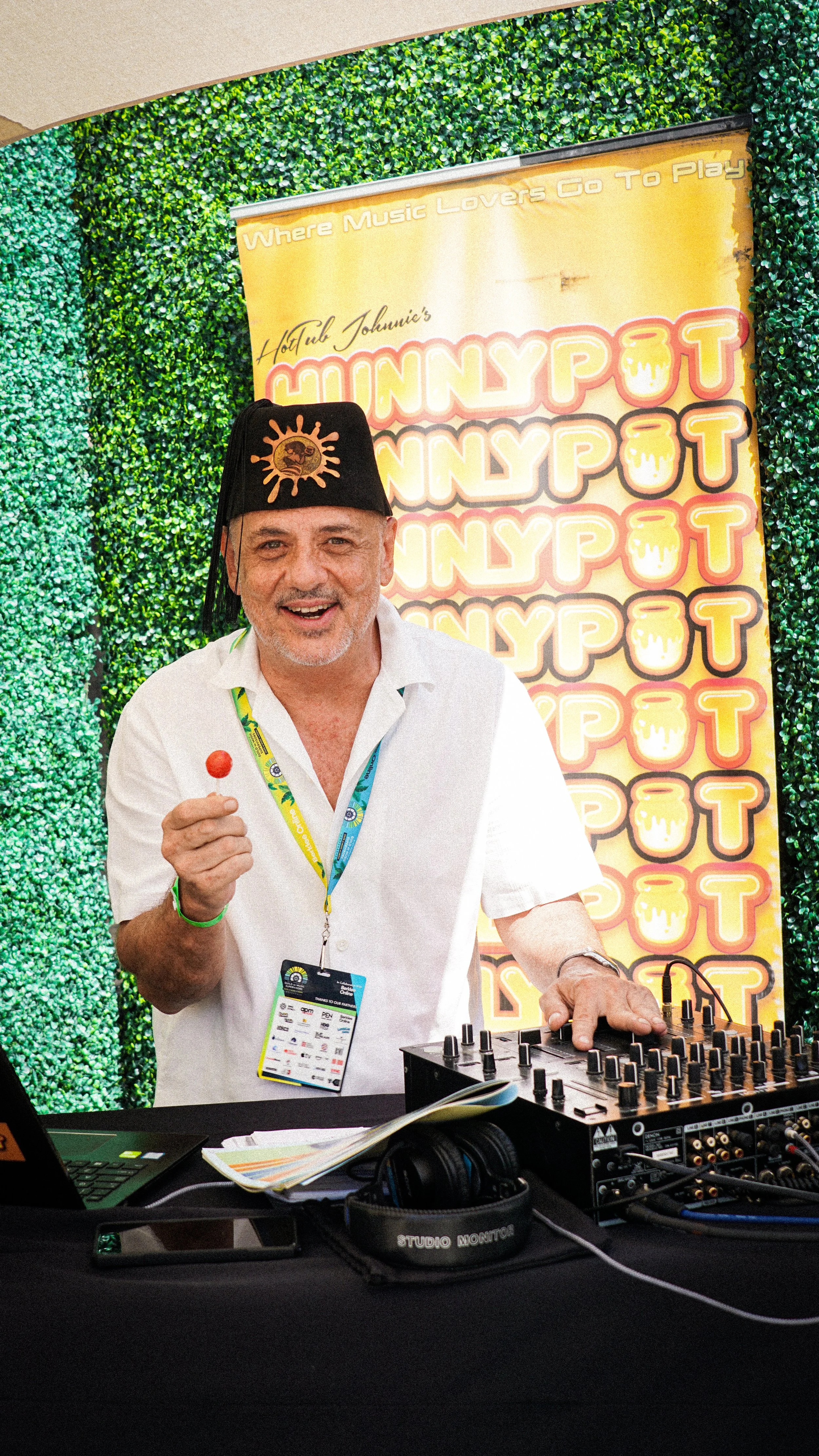
Pictured: LA-based DJ and community organizer, “Hot Tub Johnnie.”
The conference began with a few words of introduction from Allison Wood, Founder of Vibrant Ground Music who brought to you the sounds of documentaries, films, sports and video games, such as Until the Wheels Fall Off: Tony Hawk, and NASCAR:2025; Jonathan Leahy, a Grammy and Emmy-nominated supervisor with notable work on Nobody Wants This, City on Fire, and Single Drunk Female, to name a few; and Danny Exum, the Head of Music for Create Advertising Group.
From Left to Right: Danny Exum, Allison Wood, and Jonathan Leahy.
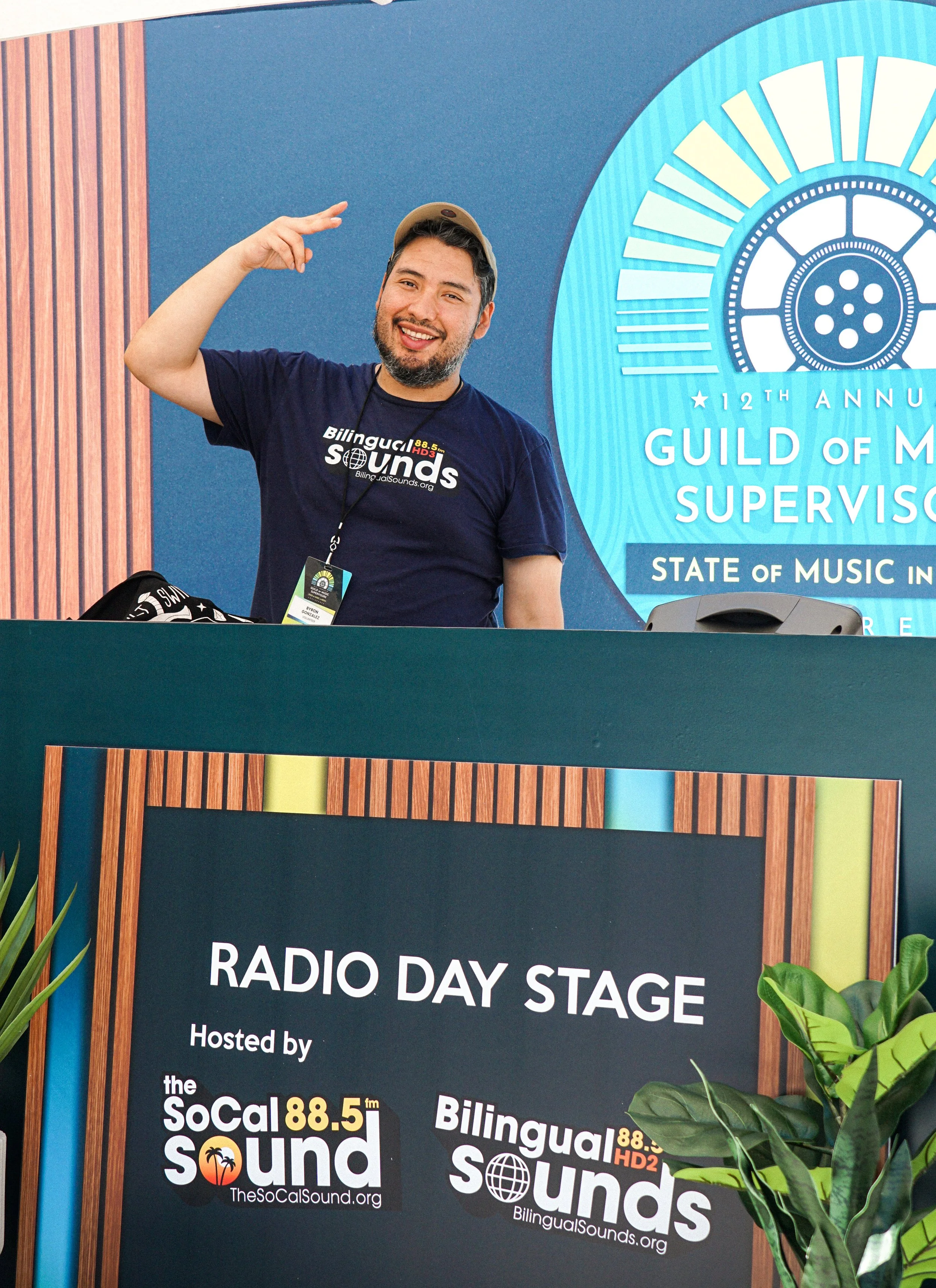
Pictured: Byron Gonzales; Radio DJ and Music Journalist for 88.5 The SoCal Sound and station manager of 88.5 HD3 Bilingual Sounds.
Starting off the conference with a Q&A as its first panel may be unorthodox, but to me, is indicative of the GMS’ intention of open communication with its members and attendees, and through greater accessibility measures via the livestream made possible by legacy filmmaker and music documentarian Ryan Taalbi and his team at Media Liberated, (a huge thanks to him is in order for granting me access to this event) it is no secret that the GMS and the greater industry of music supervision is keeping its ear to the ground as it looks for its next generation.
Pictured: Conference Attendees making lasting connections.
Jot This Down
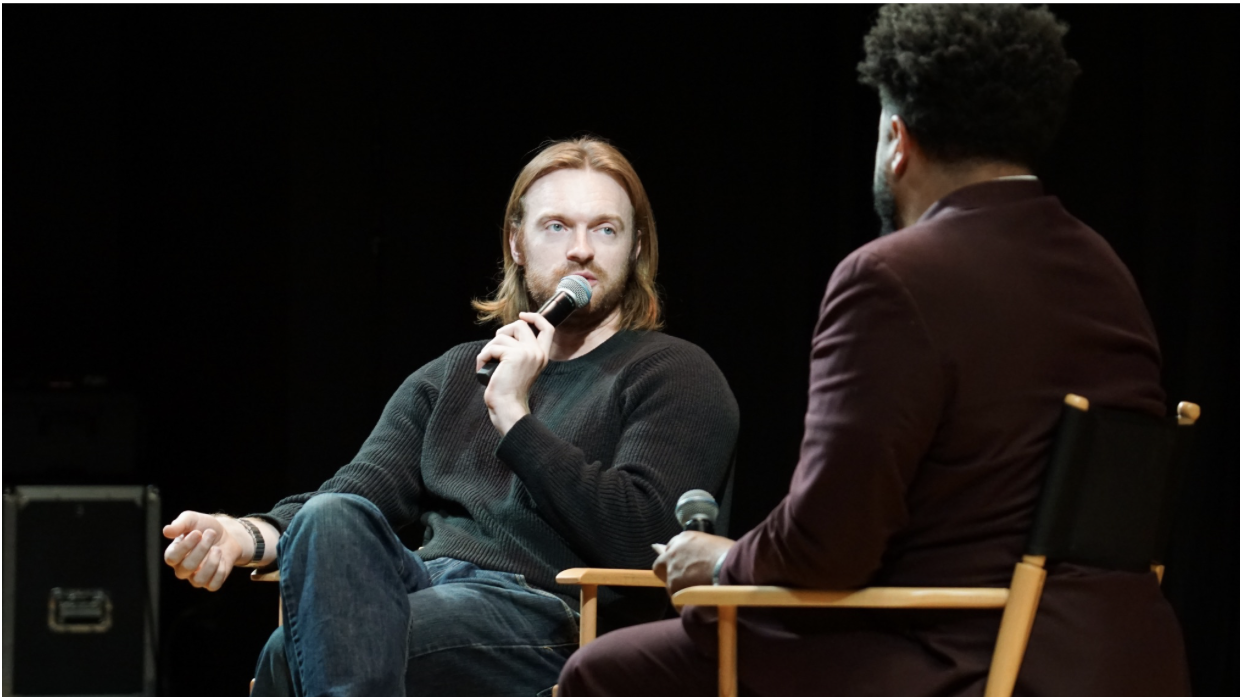
Pictured: Finneas O’Connell (left) with Diallo Riddle (right).
What the next panel gave us was the necessary precursor to what music supervision means to one of the household names of the trade. In conversation with quadruple-threat director, actor, writer and showrunner Diallo Riddle, Finneas O’Connell is the success story.
Highlighting his humble beginnings and the memories of listening to music in the car with his dad as a child, he grants us a view of the emotional bridge that leads one down the path of pursuing a career in music, however that may look. A professional like Finneas O’Connell is exemplary of the range that a music supervisor ought to possess; his resume of Apple commercials, Disney film scores, and box office hits like Barbie should signal the importance of remaining mentally, creatively and tactfully prepared for where the job may take you as a prospective music supervisor, or as an artist, for that matter.
Clever, truly, to plant this strategy of “if you like this..” or “if you feel a strong pull toward music, then this may be the career for you,” in the first half of the day to keep one simple truth at the forefront of it all; this industry thrives off of passion, and the same is true for the artists who create the music that supervisors are looking for.
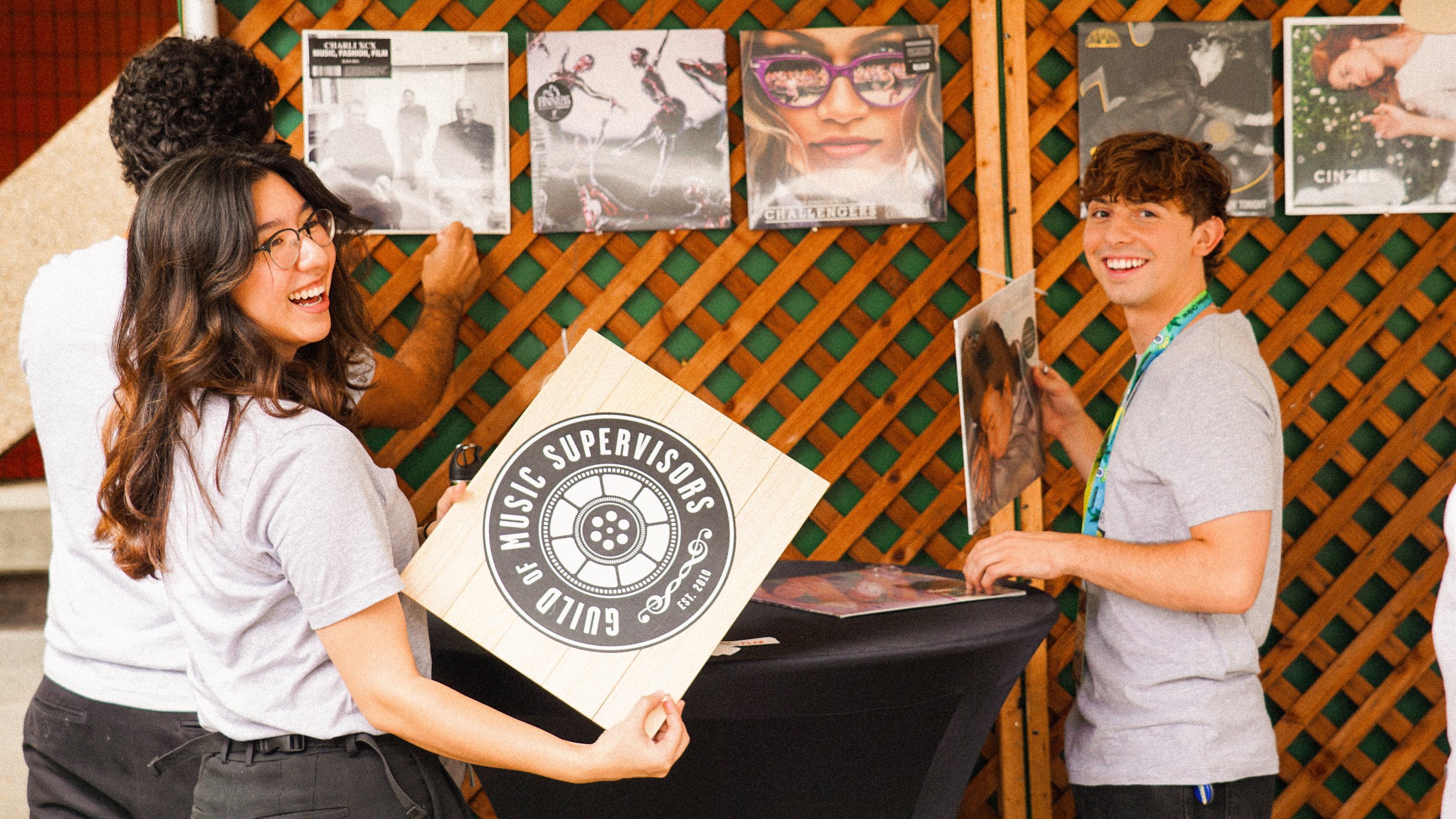
Pictured: GMS Volunteers preparing the record booth.

Another key player in my findings from the conference is Rob Ubaldo, whose insights on his music supervision practice deeply resonated with me, as a journalist and as someone who remains emotionally committed to the spiritual aspect of music; something I’m sure also resonates with Wavy readers. The advice he forwards to prospective music supervisors, I argue, can be extended to anyone pursuing a creative career in the realm of music; that is, to adopt constant expansion in your personal catalog, listening outside your comfort zone and establishing a personal relationship with music by understanding it on a fundamental level. This, in turn, grants you the ability to become a tastemaker as much as it enables you to successfully guide production. Being privy to the legal technicalities of licensing music is one thing, but it is quite another to befriend it, and invite it to do right by the project at hand. Apply this philosophy as an engineer, a recording artist or performer, and you lay the groundwork of being tactful at your craft because you know, and understand the production value happening around you.
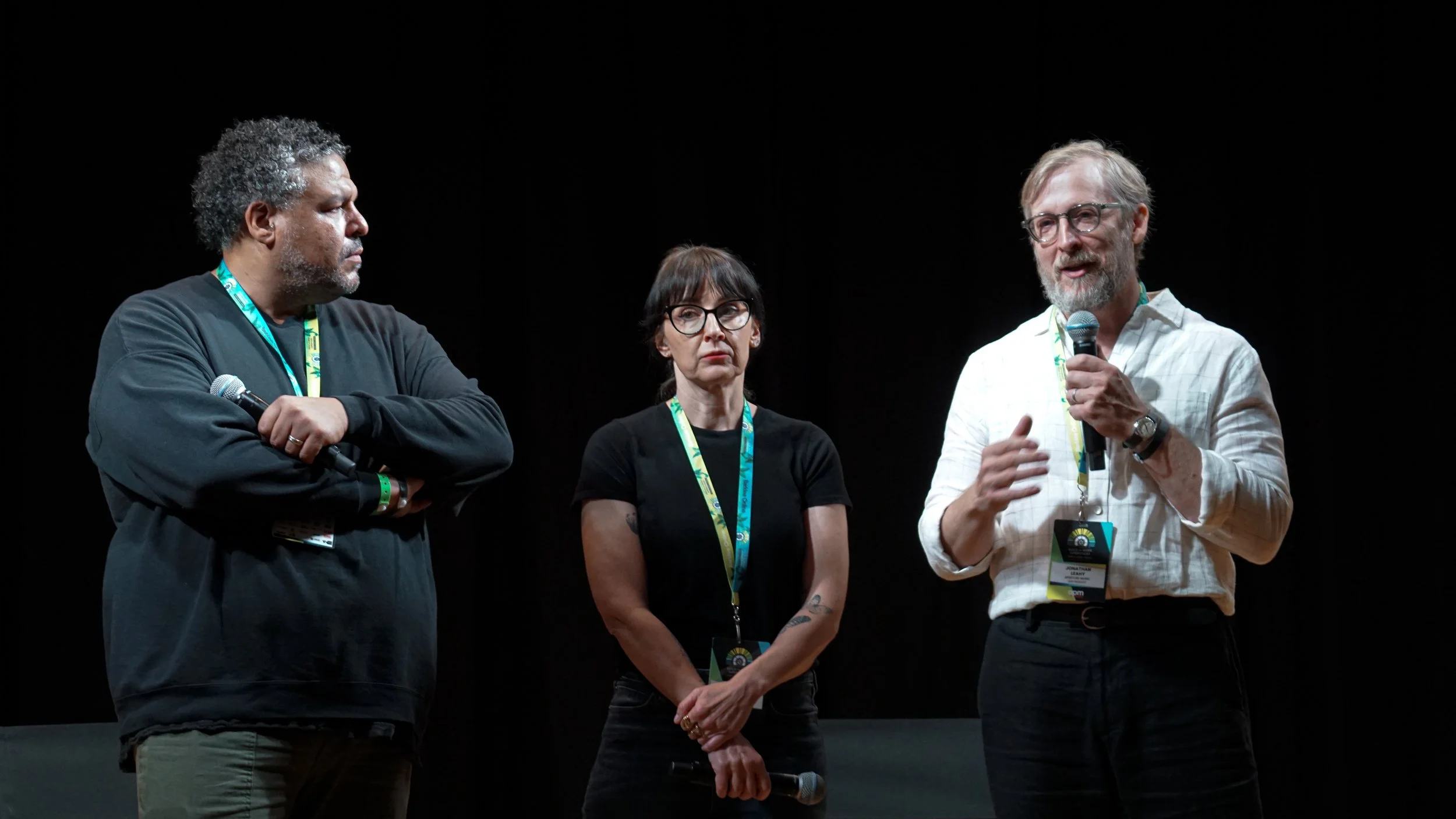
From Left to Right: Danny Exum, Allison Wood, and Jonathan Leahy.
What stayed with me after the conference wasn't the legalese of credits or the licensing deals. It was how consistently seasoned industry professionals and newcomers talked about music as something to be loved, first and foremost, before it is something to be placed. For artists wondering how supervisors find new music, the answer may start there: with people who are listening widely, listening closely, and looking for something that moves them. If you're making music, keep making it, and keep listening outside your own lane. Someone may be looking for you.
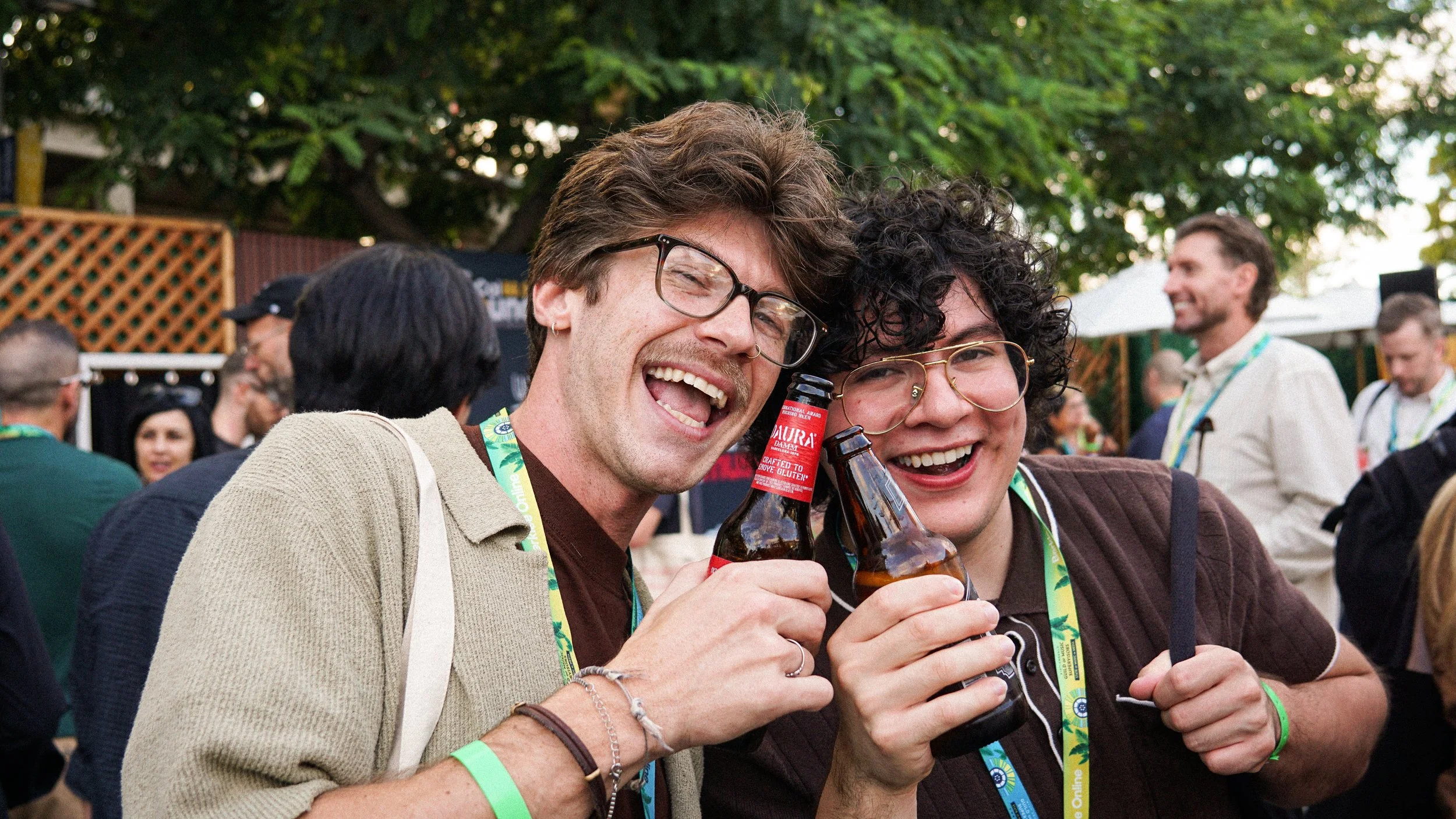
Pictured: Conference Attendees making lasting connections.
